 Up And Down Beirut

It’s Day 1 of the school year.
Freshmen are just stepping onto campus, wide-eyed about the next four years. Some seniors have returned for a victory lap. Juniors are back in a familiar place, now experienced and knowledgeable on how to proceed.
Smush it all together, and the atmosphere feels light. Opportunities abound. Some will succeed and others will fail, but that will all be determined in due time.
That’s where we find Canadian figure skating as a new season — and a new Olympic quadrennial — begins with the Grand Prix de France on Friday. The Skate Canada International follows the week after. Live coverage of both events will be available CBCSports.ca and CBC Gem, starting Friday at noon ET / 9 a.m. PT.
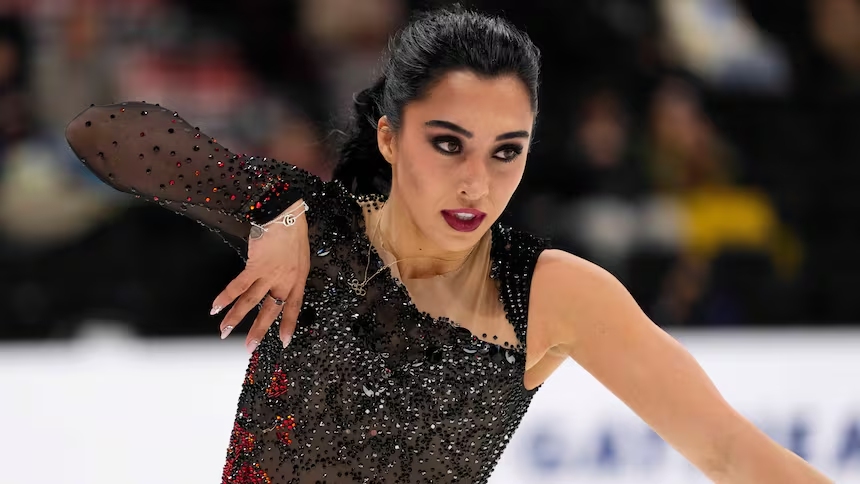
“Going into this season, it’s really just taking it in and enjoying the time and enjoying the training and the ups and downs and just being back on the circuit and getting to do a home nationals this year,” said Gabrielle Daleman, a figurative senior on the team who returned in 2025 after two seasons away.
“It’s just really taking in those moments because I am close to the end. I don’t know how much longer my body wants to keep doing this. I would always do it for the rest of my life if I could. So just really being grateful for every moment.”
-
Canadian figure skater Gogolev still discovering full potential after breakout season
Daleman, the 28-year-old Torontonian, said her confidence, something she views as a conscious being — “she likes to come and go” — is high.
Especially since the weight of an Olympic year is now gone.
“I can’t lie. I really did not enjoy it last season. I went into it and I was like, ‘Oh, I’m just going to take it every moment.’ No, we were stressy. We were depressy. We were lemon zesty. That’s my favourite saying. I think I cried for like three weeks straight in December. I was like, mom, dad, you need to come down and see me. Like, I’m not functioning.”
“And it was honestly very overwhelming because I went from being so incredibly injured for three years to like, hey, you’ve got nine months to re-walk, relearn to skate, get your jumps back in shape and try to qualify. And I was like, this was my idea? This is not one of my greatest.”

Canadian figure skater Gabrielle Daleman is the lone Canadian competing at the first Grand Prix of the season in Angers, France. Here she shares the element she loves performing most this season. Watch Grand Prix de France beginning Oct. 23 on CBC Gem.
Daleman, who did not qualify for 2026 Milano-Cortina Olympics, is the last member of Canada’s national team who competed at the indelible 2018 Winter Games, when Tessa Virtue and Scott Moir’s ice-dance gold headlined a four-medal haul.
She was just 20 then, a veritable freshman and part of the team-event squad that won gold. Now, she’s a vet.
“I don’t know if it’s a role. I’m more just kinda through the looking glass. I’m loving seeing the new generation come up. I’m still trying to get to know everyone and make sure I meet them in one way or another, but I’m really just being like, ‘Wow, like we have really good talent coming up,’” Daleman said.

After struggling with injuries and surgeries over the past four years, Gabrielle Daleman of Newmarket, Ont., is looking forward to the upcoming ISU Grand Prix of Figure Skating Series. Daleman will be competing at the Grand Prix de France next weekend.
Next wave of talent
In charge of shepherding that next wave of talent to the Olympic podium is CEO Therese Brisson, who took over the role in July after spending six years in the same position at Alpine Canada.
Brisson, the 60-year-old from Montreal, also competed at a pair of Olympics herself, capturing silver in 1998 and gold in 2002 as a member of Canada’s national women’s hockey team.
Canada has won just one Olympic figure-skating medal since 2018, a 2026 bronze from ice-dance duo Piper Gilles and Paul Poirier, who are taking the year away from competition.
Since 2022, only one active Canadian individual or team has climbed the podium at worlds, with pairs partners Lia Pereira and Trennt Michaud taking bronze earlier this year.
“As we look ahead, and part of the task here is to renew the strategic plan, I do think we should be ambitious. I look at the athletes and the athlete pool. We have more rinks per capita than any other nation, we have the best coaches in the world — the world comes here to be with our coaches. And if we have athletes with the same ambition, determination and work ethic, there’s no reason why we shouldn’t be competing with the world’s best and really a world-leading nation in skating,” Brisson said.
Brisson said the goal for Skate Canada should be to contend for three to four medals each Olympics, with an underlying system that replenishes itself and prevents lulls.
Among the biggest early changes was the announcement that high-performance director Mike Slipchuk would be transitioning out of the position after this season after 20 years at the helm. A replacement has not yet been named.
“The goal this year is to set the stage for 2030, and just as importantly 2034, because rebuilding that pool of athletes with podium potential takes time,” Brisson said.

Therese Brisson, right, said the goal for Skate Canada should be to contend for three to four medals each Olympics, with an underlying system that replenishes itself and prevents lulls. (Adrian Wyld/The Canadian Press)
Canada has young team
With a young team across the board, there is plenty of potential for skaters to prove this season that they could be podium threats in the French Alps in 2030.
Young pairs duos Jazmine Desrochers and Kieran Thrasher or Ava Kemp and Yohnatan Elizarov could take a step forward in their rookie seasons on the Grand Prix circuit. Newly formed ice-dance team Marjorie Lajoie and Jean-Luc Baker, who previously competed for the U.S., may display quick chemistry.
In singles, the likes of Fée Ann Landry and Sara-Maude Dupuis will be on the senior Grand Prix circuit, while juniors like Lia Cho have already shown great promise.

Jazmine Desrochers, top, and partner Kieran Thrasher, bottom, could take a step forward in their rookie season on the Grand Prix circuit. (Justin Tang/The Canadian Press)
Meanwhile, Pereira and Michaud, women’s skater Madeline Schizas, men’s skater Stephen Gogolev and others will look to continue building through the primes of their careers.
This season, though, is about learning. Daleman will find out what she has left. Brisson will get to know the talent she’ll be working with. And the next generation of skaters will continue to discover whether they possess what it takes to reach Olympic medal-contender status.
To that end, Olympic champion Daleman can be a guide, bridging Canada’s most recent golden generation to what could possibly be its next.
“I just try to help, and when someone’s going through a tough time, letting them know it can get better and do not give up,” Daleman said. “And if you keep your head down and put in the work, it will show.”
